
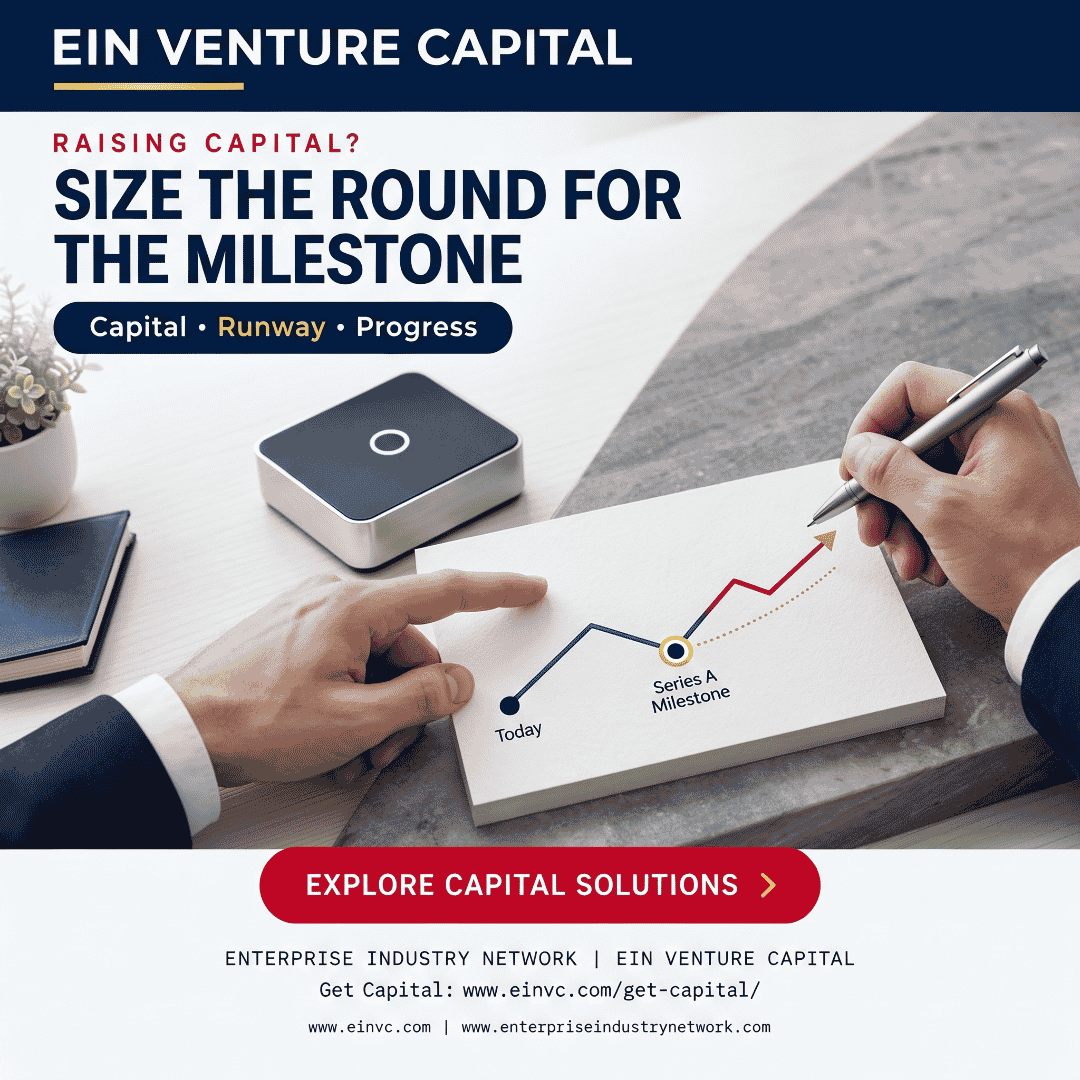
Raising Venture Capital? Size the Round Around the Milestone You Need to Reach
How much capital should your company raise?
For many founders, that question quickly turns into a number.
$500,000.
$2 million.
$5 million.
But a stronger starting point is not the number itself.
It is the milestone the company expects that capital to help reach.
Start With the Next Meaningful Business Milestone
A venture round should ideally connect the company’s current position with a specific stage of progress.
Depending on the business, that milestone could involve:
- Completing product development
- Launching commercially
- Reaching a meaningful revenue level
- Expanding into additional markets
- Building a sales organization
- Achieving stronger unit economics
- Completing important regulatory or technical work
- Reaching the stage needed for a future financing round
The milestone should be meaningful enough that reaching it changes the company’s position.
The Round Should Support the Journey to That Milestone
Once the target milestone is clear, founders can work backward.
What has to happen before the company gets there?
That may include:
- Hiring
- Product development
- Sales and marketing
- Technology infrastructure
- Inventory or production
- Professional services
- Regulatory work
- General operating expenses
The required capital should reflect the actual execution plan rather than an arbitrary fundraising target.
Think About Runway, Not Just Spending
The amount raised also affects how long the company can operate before it may need additional capital.
That period is often referred to as runway.
A founder should understand:
- Current cash position
- Expected monthly operating expenses
- Expected revenue during the period
- Planned hiring
- Major one-time expenditures
- Potential delays or execution setbacks
A plan that assumes everything happens exactly on schedule may leave very little room for unexpected events.
Do Not Build the Round Only Around Today’s Burn Rate
Current expenses may not represent future expenses.
If the company plans to hire engineers, salespeople or operational staff after the raise, monthly spending may increase.
The same can happen when the business moves from product development into commercial launch or expands into additional markets.
Founders should therefore model the business after the proposed investment, not only before it.
Connect Capital to Measurable Progress
Investors may want to understand what the company expects to accomplish with the proposed round.
That is different from simply presenting a list of expenses.
For example:
“We need capital for hiring and marketing” describes spending.
“We plan to build the sales organization needed to reach a defined commercial milestone” describes the intended business outcome.
The second explanation gives the capital raise more strategic context.
A Larger Round Is Not Automatically Better
Founders may be tempted to raise as much capital as possible.
But additional capital can also affect:
- Dilution
- Ownership
- Investor expectations
- Future financing strategy
- Governance
- The valuation assumptions needed to support the round
The appropriate amount depends on the business, stage, market and proposed terms.
More capital is not automatically the better outcome.
A Round That Is Too Small Can Create a Different Problem
Underestimating the capital requirement can also create risk.
If the company runs low on cash before reaching the milestone that was supposed to strengthen its position, it may have to return to the market earlier than expected.
That can happen before enough progress has been made to support the next fundraising conversation.
The fundraising target therefore needs to balance capital efficiency with the realistic cost of execution.
Include Time for Fundraising Itself
Founders should also remember that another financing process may take time.
The company should not assume that a future round will close immediately when cash becomes low.
Investor outreach, meetings, diligence, negotiations, documentation and closing can all extend the timeline.
That makes forward planning important.
Build More Than One Scenario
Instead of relying on a single forecast, founders can model several operating scenarios.
For example:
- Base case
- Slower-growth case
- Higher-expense case
This can help reveal how sensitive the capital requirement is to changes in revenue, hiring or execution timing.
Know What Happens if the Milestone Takes Longer
Every growth plan contains assumptions.
A product launch may slip.
A customer contract may take longer.
A hiring plan may change.
Market conditions may shift.
Founders should understand how those changes would affect runway and whether the company has enough flexibility to continue operating.
The Milestone Should Strengthen the Company’s Position
The next milestone should ideally create meaningful evidence of progress.
That may be stronger revenue, validated demand, improved economics, commercial traction, operational scale or another measurable development relevant to the company’s strategy.
The specific milestone depends on the business.
The objective is to avoid raising capital without a clear view of what the company should look like when that capital has been deployed.
Be Ready to Explain the Logic
When discussing a round, founders should be able to explain:
- Why this amount?
- Why now?
- How long is it expected to last?
- What will the company accomplish?
- What assumptions support the plan?
- What happens if execution is slower than expected?
- What position should the company be in when the round is substantially deployed?
Those questions connect fundraising with business execution.
Capital Is a Bridge, Not the Destination
The purpose of a venture round is not simply to put cash in the bank.
Capital should help the company move from its current position toward a more developed one.
That means founders should think about the round as a bridge:
Where are we today?
Where does this capital need to take us?
What evidence of progress should exist when we arrive?
Those questions can help make the fundraising strategy more disciplined.
EIN Venture Capital provides a starting point for businesses exploring potential capital solutions and preparing for investor conversations.
Investor appetite, valuation, dilution, financing structure, diligence, terms and investment decisions vary by company, investor and transaction. An inquiry, introduction, meeting or investor interest does not guarantee capital.
Frequently Asked Questions
How should a startup decide how much venture capital to raise?
A useful starting point is to identify the next meaningful business milestone, estimate the resources and time required to reach it, and model the resulting operating runway under realistic assumptions.
What is runway in venture capital planning?
Runway generally refers to how long a company can continue operating before its available cash is depleted, based on its cash position, revenue and spending.
Is raising more venture capital always better?
No. A larger round may provide additional operating capacity, but it can also affect dilution, ownership, governance, valuation expectations and future financing strategy.
Why should founders build multiple funding scenarios?
Different scenarios can show how changes in revenue, hiring, expenses or execution timing may affect the company’s capital requirement and runway.
Take the Next Step
Subscribe on YouTube:
https://www.youtube.com/@enterpriseindustrynetwork
Looking to raise capital for your business?
Explore Capital Solutions with EIN Venture Capital:
https://www.einvc.com/get-capital/
Exit. Acquire. Invest.
Explore Enterprise Industry Network
https://enterpriseindustrynetwork.com/