
Raising Capital? Target Investors Who Actually Fit the Round
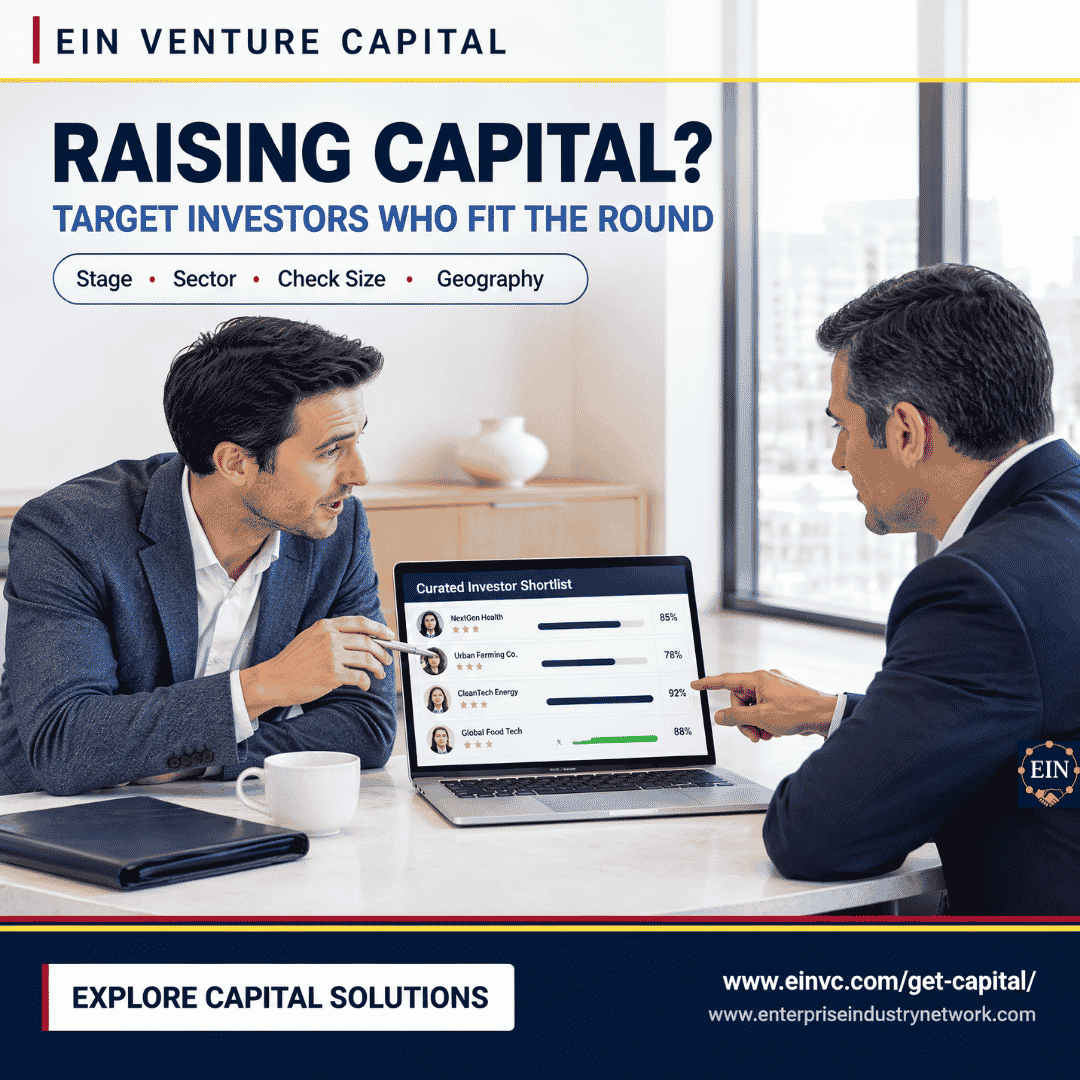
Raising capital?
It can be tempting to build the largest possible investor list and start sending the pitch everywhere.
But more names do not automatically create better fundraising opportunities.
A more useful question is:
Does this investor actually fit the round we are raising?
Investor Fit Starts With Stage
Different investors focus on different stages of company development.
Some primarily consider very early-stage opportunities.
Others may focus on companies that already have meaningful revenue, established traction or a more developed operating history.
A company can have an attractive opportunity and still be outside an investor’s preferred stage.
Before outreach, understand whether the company’s maturity is reasonably aligned with the investor’s mandate.
Check the Sector
Many investors concentrate on particular industries, technologies or business models.
That specialization may reflect experience, investment strategy, portfolio construction or internal expertise.
A founder raising capital for a manufacturing company, healthcare platform, software business or consumer brand may therefore encounter very different groups of potential investors.
Sector relevance should be considered before adding an investor to the target list.
Understand the Investor’s Typical Check Size
Investment amount can be one of the fastest ways to identify a mismatch.
A company seeking a relatively modest amount may not fit an investor that normally participates in much larger rounds.
Likewise, an investor whose normal investment size is substantially below the company’s needs may not be the right lead for the round.
The exact amount an investor is willing to deploy varies by opportunity, but understanding the general investment range can make outreach more focused.
Consider Geography
Some investors operate broadly.
Others may focus on specific states, regions, countries or markets.
Geography may also matter because of regulatory considerations, market familiarity, portfolio strategy or the investor’s ability to support the company.
If an investor’s mandate does not include the company’s geography, a strong pitch may still be outside the investor’s scope.
Look at the Investor’s Mandate
Stage, sector and geography are only part of investor fit.
An investor may also have preferences involving:
- Business model
- Revenue profile
- Ownership position
- Investment structure
- Board involvement
- Follow-on strategy
- Portfolio concentration
- Other investment criteria
Founders should not assume that every investor using the words “venture capital” or “growth capital” evaluates the same opportunities.
Do Not Judge Investor Fit Only by Brand Recognition
A well-known investor may look attractive on an outreach list.
But brand recognition does not necessarily mean strategic fit.
A smaller or less visible investment firm may be more relevant if its mandate closely matches the company’s stage, sector and capital requirements.
The goal is not to build the most impressive investor list.
The goal is to build the most relevant one.
Review the Portfolio
An investor’s existing portfolio can sometimes provide useful context.
It may help founders understand:
- Industries the investor understands
- Stages the investor typically supports
- Types of companies already backed
- Potential competitive conflicts
- Patterns in investment strategy
Portfolio history does not guarantee that an investor will consider a similar company, but it can help inform outreach research.
Match the Investor to the Round
The same company may need different investors at different stages.
An investor that was appropriate for an earlier round may not be the right fit for the next one.
As the company develops, the capital requirement, risk profile, operating scale and investor expectations may change.
Investor targeting should therefore be connected to the specific round being raised now.
Build a Prioritized Investor List
Instead of treating every investor equally, founders can prioritize outreach.
A simple framework may include:
- High-fit investors
- Possible-fit investors
- Low-fit or uncertain investors requiring more research
This can help focus time and follow-up on the investors most likely to have a mandate that aligns with the opportunity.
Better Targeting Does Not Guarantee Investment
Even a strong investor-company fit does not guarantee interest or capital.
Investors may decline opportunities because of portfolio allocation, market conditions, timing, internal priorities, valuation, diligence findings or many other factors.
Investor fit improves relevance.
It does not remove investment risk or guarantee a positive decision.
Quality of Outreach Can Matter More Than Quantity
Before sending another pitch, ask:
- Does this investor invest at our stage?
- Does the sector fit?
- Is our capital requirement within the investor’s general range?
- Does the geography fit?
- Does the investment mandate appear relevant?
If several of those answers are clearly no, the investor may not belong near the top of the outreach list.
EIN Venture Capital provides a starting point for businesses preparing for capital discussions, investor targeting and potential capital-source alignment.
Investor mandates, interest, due diligence, valuation, terms and investment decisions vary by investor and opportunity. Researching investor fit or making an introduction does not guarantee investor interest, commitment or funding.
Frequently Asked Questions
What does investor fit mean when raising venture capital?
Investor fit refers to how well a company’s stage, sector, geography, capital requirement and other characteristics align with an investor’s mandate and investment strategy.
Why does an investor’s typical check size matter?
An investor’s usual investment range can help indicate whether the amount being raised is reasonably aligned with the investor’s strategy. Actual investment decisions and amounts vary by opportunity.
Should founders contact as many investors as possible?
Not necessarily. A more targeted list of investors whose mandates align with the company may create more relevant conversations than broad outreach to investors with little apparent fit.
Does a strong investor fit guarantee funding?
No. Investor fit only indicates potential alignment. Individual investment decisions also depend on diligence, valuation, portfolio strategy, timing, market conditions and many other factors.
Take the Next Step
Subscribe on YouTube:
https://www.youtube.com/@enterpriseindustrynetwork
Ready to present your opportunity to potential capital sources?
Start with EIN Venture Capital:
https://www.einvc.com/get-capital/
Exit. Acquire. Invest.
Explore Enterprise Industry Network
https://enterpriseindustrynetwork.com/