
Applying for Business Funding? Review Your Existing Debt Before the Lender Does
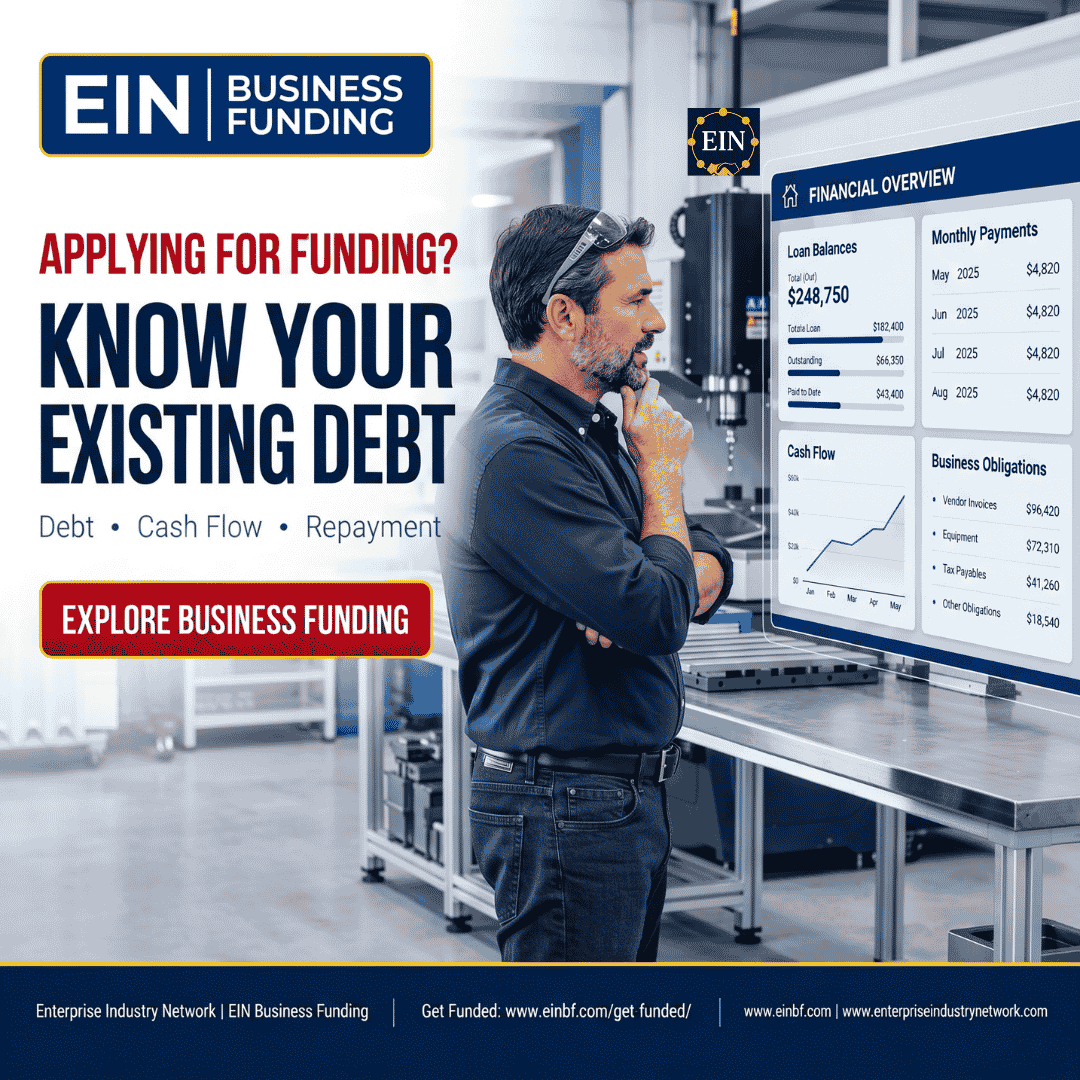
Applying for business funding?
Before submitting the request, take a close look at the debt your business already has.
Lenders may review much more than the amount you want to borrow.
They may also want to understand what the business already owes, what it is currently paying each month and whether the company can reasonably support another financial obligation.
Existing Debt Is Part of the Funding Picture
A business may already have:
- Term loans
- Business lines of credit
- Business credit cards
- Equipment financing
- Vehicle financing
- Merchant financing
- SBA or bank loans
- Other recurring debt obligations
Those obligations can affect the overall funding review.
Know the Current Balance
For each existing obligation, know approximately how much remains outstanding.
A lender may want to understand the total debt position of the business rather than looking at a new request in isolation.
Make sure internal records match recent lender statements wherever possible.
Know the Monthly Payment
The monthly payment is often just as important as the outstanding balance.
A large balance with a manageable payment structure may affect the business differently from several smaller obligations that create heavy monthly cash demands.
Before applying, calculate what the business is already committed to paying every month.
Review Available Credit
If the business has revolving credit, such as a business line of credit or credit card, understand both:
- The total credit limit
- The amount currently used
A heavily utilized revolving account may present a different financial picture from an account with substantial available capacity.
Look at Debt Alongside Cash Flow
Debt should not be reviewed by itself.
The more useful question is:
How comfortably can current business cash flow support existing obligations?
A lender may evaluate whether the business has sufficient repayment capacity after considering its operating expenses and current debt payments.
Understand Debt Service
Traditional lenders may use measures such as debt service coverage when evaluating whether cash flow can support required payments.
The exact calculation and required level can vary by lender and financing product.
Business owners do not necessarily need to calculate every underwriting ratio themselves, but they should understand the underlying issue:
Does the business generate enough cash to comfortably support the debt it already has and the new financing being requested?
Do Not Forget Recently Opened Obligations
New financing, recently opened credit accounts or fresh debt can also matter.
If the business recently borrowed for equipment, expansion, inventory or another purpose, include that obligation in the overall picture.
Do not assume a recently opened account will be ignored simply because it has not appeared in older financial statements.
List Every Business Obligation Before Applying
Create a simple debt schedule before approaching a lender or funding provider.
For each obligation, record:
- Lender or provider
- Type of financing
- Original amount or credit limit
- Current balance
- Monthly payment
- Interest rate, if known
- Open date
- Remaining term, if applicable
This can make it easier to answer funding questions accurately and consistently.
Existing Debt Does Not Automatically Mean No
Having business debt does not automatically prevent a company from obtaining additional financing.
Many operating businesses use financing as part of normal business activity.
The more important issue is whether the total financial structure remains manageable.
Eligibility depends on the lender, product, business performance, cash flow, credit profile and other underwriting factors.
Ask Why the New Funding Is Needed
The purpose of the new financing also matters.
For example, the business may be seeking capital to:
- Purchase revenue-producing equipment
- Expand into a new location
- Acquire another business
- Increase inventory
- Support working capital
- Refinance or restructure eligible debt
A clear use-of-funds explanation can help show how the new obligation fits into the larger business plan.
Do Not Borrow Simply to Cover an Unsustainable Payment Structure
New financing should not automatically be viewed as the solution to every cash-flow problem.
If the business is consistently struggling to meet current obligations, adding another payment may increase pressure rather than solve the underlying issue.
Review the cause of the cash-flow shortfall first.
Check for Duplicate or Overlapping Financing
Businesses sometimes accumulate several products over time:
A credit card for inventory.
A line of credit for working capital.
An equipment loan.
A short-term product for another operating need.
Individually, each decision may have made sense at the time.
Together, they can create a more complicated debt structure.
Understanding the complete picture before applying for additional funding can help prevent surprises.
Make Sure the Application Matches the Records
If a funding application asks about existing loans, lines of credit or credit cards, provide accurate and current information.
Inconsistent or incomplete debt information can create additional questions during review.
Keep lender names, balances and payment information organized before the application begins.
Think About the New Payment Before the Approval
Do not wait until an offer arrives to ask whether the payment is affordable.
Before applying, estimate how much additional monthly debt service the business could reasonably support.
That does not determine what a lender will approve.
But it can help the owner evaluate whether a potential financing offer fits the business.
Funding Readiness Is About the Whole Financial Picture
Good funding preparation is not only about presenting revenue.
It also means understanding:
- Cash flow
- Existing debt
- Monthly obligations
- Available credit
- Repayment capacity
- The planned use of new funds
That gives the business owner a clearer picture before the lender begins its own review.
EIN Business Funding provides a starting point for U.S. business owners exploring potential funding options and preparing for lender review.
Funding availability, eligibility, limits, costs, collateral, personal guarantees and repayment terms vary by lender, product and applicant circumstances. An inquiry, prequalification or application does not guarantee financing.
Frequently Asked Questions
Do lenders look at existing business debt?
They may. Depending on the product and lender, existing debt obligations, cash flow and repayment capacity can be part of the funding review.
Does having an existing business loan prevent me from getting more funding?
Not automatically. Eligibility depends on the overall financial condition of the business, repayment ability, credit profile, lender requirements and the type of financing being requested.
What existing debt information should I prepare before applying?
It can be useful to organize lender names, account types, credit limits or original amounts, current balances, monthly payments, open dates and remaining terms where applicable.
Why does cash flow matter when a business already has debt?
Cash flow helps show whether the business can support current obligations and potentially handle an additional payment. The exact underwriting method varies by lender and product.
Take the Next Step
Subscribe on YouTube:
https://www.youtube.com/@enterpriseindustrynetwork
Explore EIN Business Funding:
https://www.einbf.com/get-funded/
Exit. Acquire. Invest.
Explore Enterprise Industry Network
https://enterpriseindustrynetwork.com/